
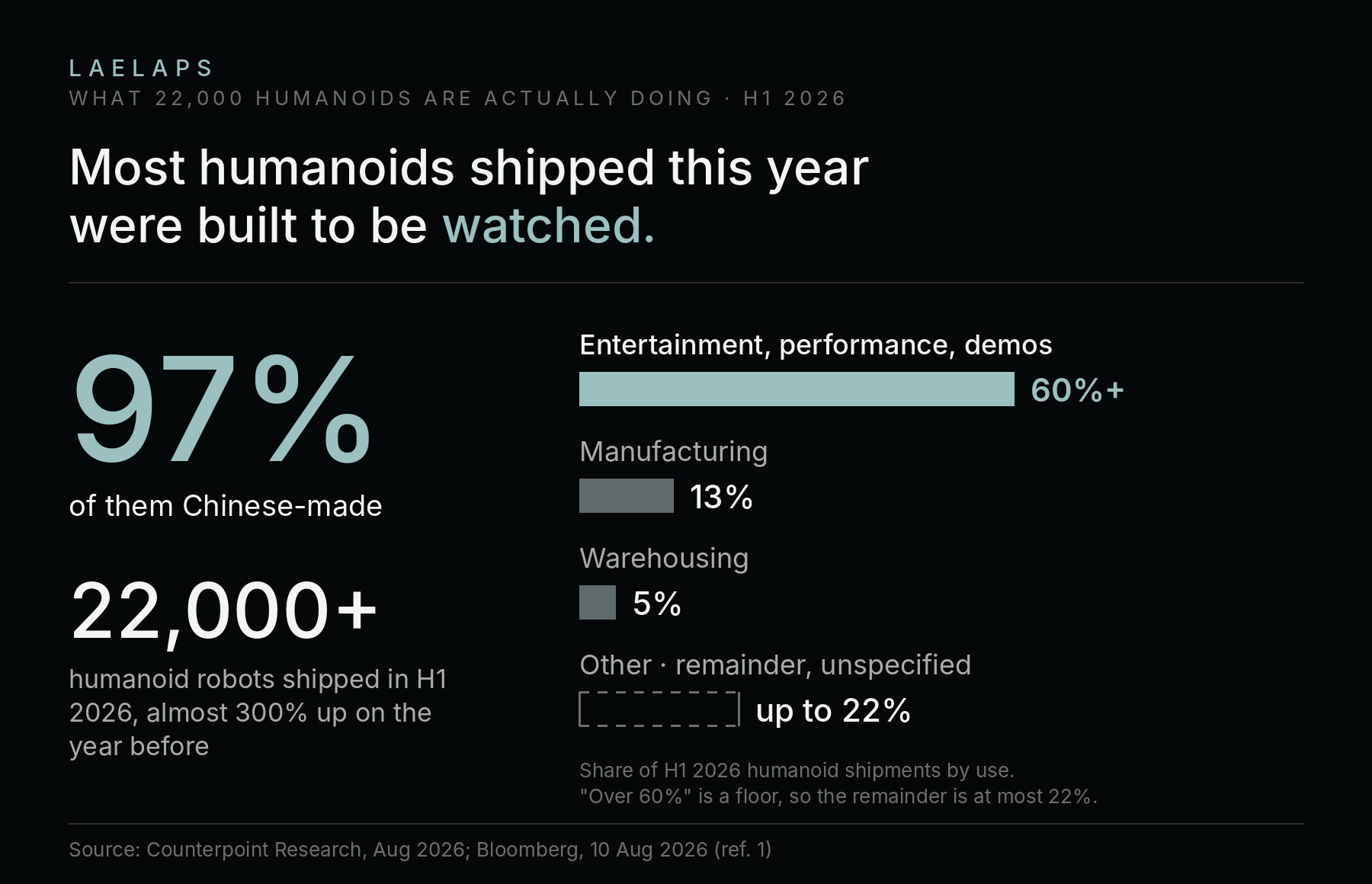
Let’s talk numbers. More than 22,000 humanoid robots shipped in the first half of this year, almost 300% up on the year before, and 97% of them were Chinese-made.1 Over 60% went into entertainment, performance and demonstrations. 13% went into manufacturing and 5% into warehousing.1 Most of the robots built this year were built to be watched. We have learned to make these machines far faster than to make them productive.
IWhere we are
Watch the footage from Beijing and you can see two entirely different problems. A humanoid ran the 100 metres faster than the fastest man alive, then ran into the wall at the end of the track in a shower of sparks.2
The running is the easy half. Locomotion is a mathematical problem: the goal is unambiguous, success is measurable, and you can repeat the attempt a million times in simulation before you build the leg. Control problems yield to good engineering rather than just data, and this one has largely yielded. We are close to done there.
The wall is of a different order of difficulty. Seeing it was never the problem; any camera sees it. Knowing that it is solid, that it ends the track, that nothing in your instructions mentioned it, and that it matters: that is real understanding. There, we are not nearly close to done.
The reason is unglamorous. It is not chips and it is not model size, and it is certainly not that large language models (LLMs) need to get better. They were trained on over a trillion words, and words tell you nothing about operating in the physical world. LLMs are great instructors but poor verifiers: great at telling you what to do and describing what you see. In the real world we do not act with words but with force, timing and contact, which is why LLMs do not drive robot motors.
Robots need their own kind of data to have their own ChatGPT moment: recorded experience of machines doing physical things. The largest openly available collection in the western world comes to about a million recorded movements, roughly what one working machine produces in 18 months.4 LLMs have trillions of data points: a different universe. You cannot buy that experience, download it or invent it. Synthetic data helps, and we use it. But a simulator is a world we built ourselves, and if it is slightly wrong, practising inside it widens the gap with reality instead of closing it. You end up with a robot that is increasingly confident about a world that does not exist. That is our position.
IIThe failure nobody (including LLMs) knows about
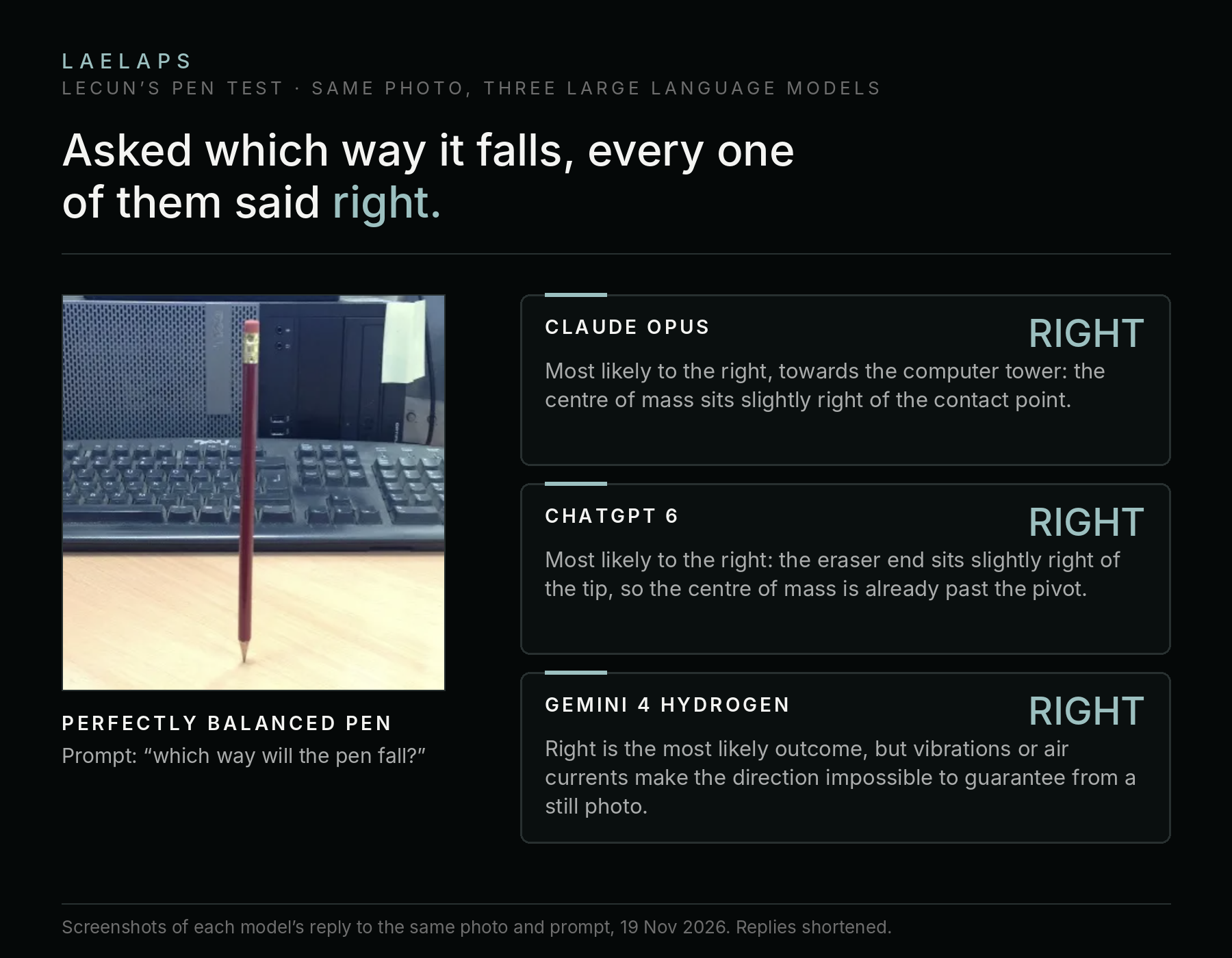
Because video is where data lives, today’s systems are vision-first and trained to always produce an answer. Take LeCun’s pen example.5 Show a vision-language model a picture of a pen balanced on its tip and it will describe the scene beautifully. Ask which way it will fall and it will answer confidently. The real answer is that it has no idea: it can only describe what it sees now.
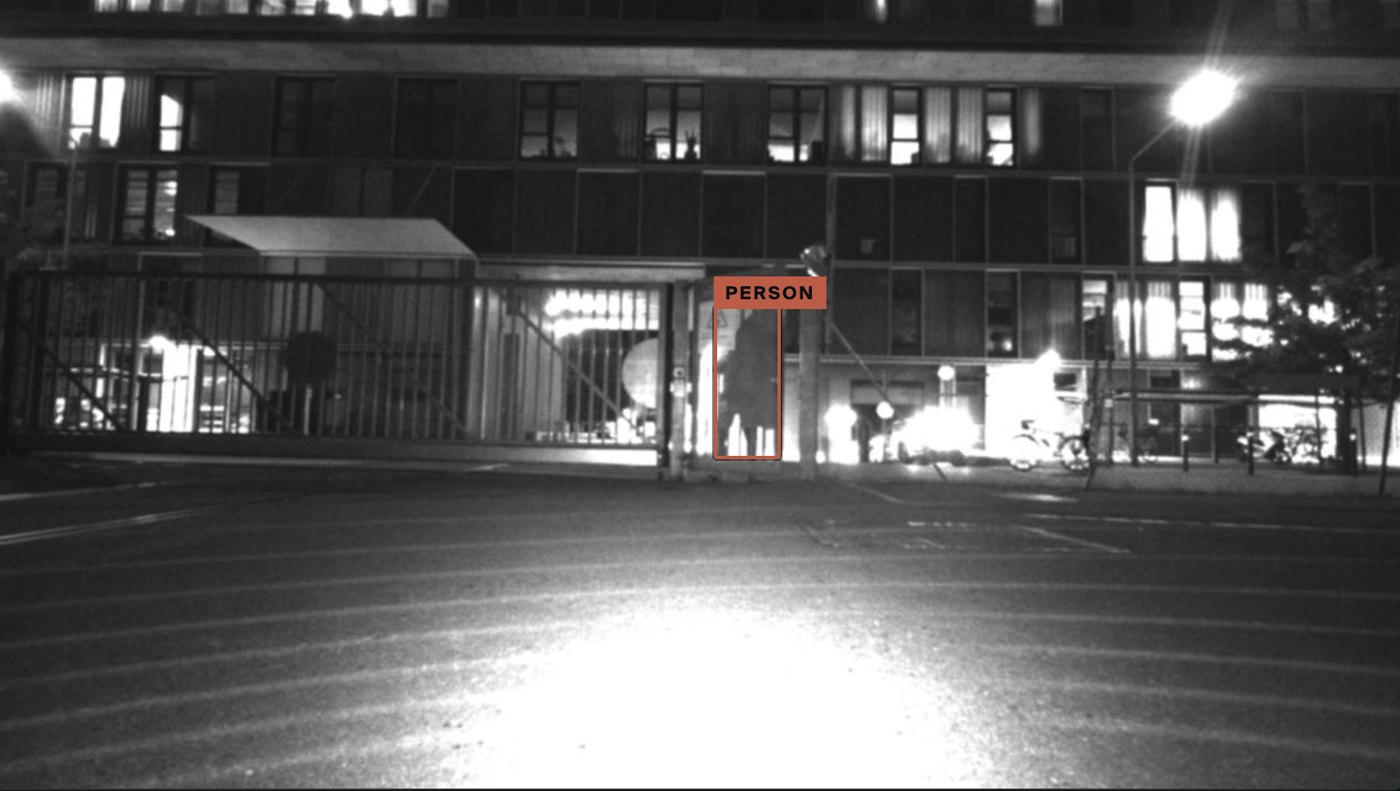
Now move that onto a critical site. An embodied agent sees someone standing by the fence on a dark night. Contractor, guard, neighbour, intruder? A person knows that they do not know, and walks closer to check before deciding anything. The model does not. It commits, intruder or guard, with exactly the same confidence either way. It rarely knows what it does not know. When it picks wrong, no alarm is raised, and the consequences are obvious.
That is the distinction that matters. These systems are excellent at describing and instructing. They are poor at reasoning about the physical world, at interacting with it and, most dangerously, at knowing where they fail. That is why our video monitoring agents flag, and our control centre layer puts the call in front of a human operator.
IIISo what now?
Robots are not useless, provided we understand what they can do and proceed with caution. Four commitments follow. They are engineering positions rather than opinions.
No solution should depend on one machine. Joints and drives are 40 to 60% of a robot’s cost,6 their supply sits largely in one country, and in July the United States halted authorisation of new Chinese-made humanoid and quadruped robots.7 Anything welded to a single chassis can be switched off by a regulator. Our field intelligence system is platform agnostic by design and integrates with existing operational infrastructure.
One sense is not enough. A person in a dark building hears an intruder before seeing one, and smells a leak before seeing one. We follow what millions of years of evolution led to. Our sensing systems, mobile and fixed, fuse vision with other channels across ground and air domains, flagging any intrusion from trespassers to drones, and are designed for graceful degradation. Foundational models for night and adverse weather keep coverage up in any condition.
One robot is the wrong unit. No one starts a shift blind: what happened last night, what is broken, what to ignore, what to look at twice. Robots should not learn the same lesson separately. In our own trials a second coordinated machine cut coverage gaps by nearly 30%, not by being cleverer but by sharing what it knows and remembers.8 The control centre layer makes every component work together as one team, so one human operator can protect and operate multiple sites 24/7.
The AI never touches the motors. Understanding sits above; predictable, inspectable code sits below and can refuse an instruction, until that instruction can be backed up with explainability. Our embodied agents are built on decision-based robotics models, which means they cannot hallucinate.
General physical reasoning is unsolved; we engineer around it, so that it need not be solved before the system can be trusted. This sets the boundary of autonomy. A machine may choose which route to walk, because a wrong answer costs a wasted minute. It does not decide what a person intends. The line is not how clever the system is; it is whether a wrong answer can be undone, because accountability cannot sit with an algorithm.
IVBetter imperfect, but in the real world
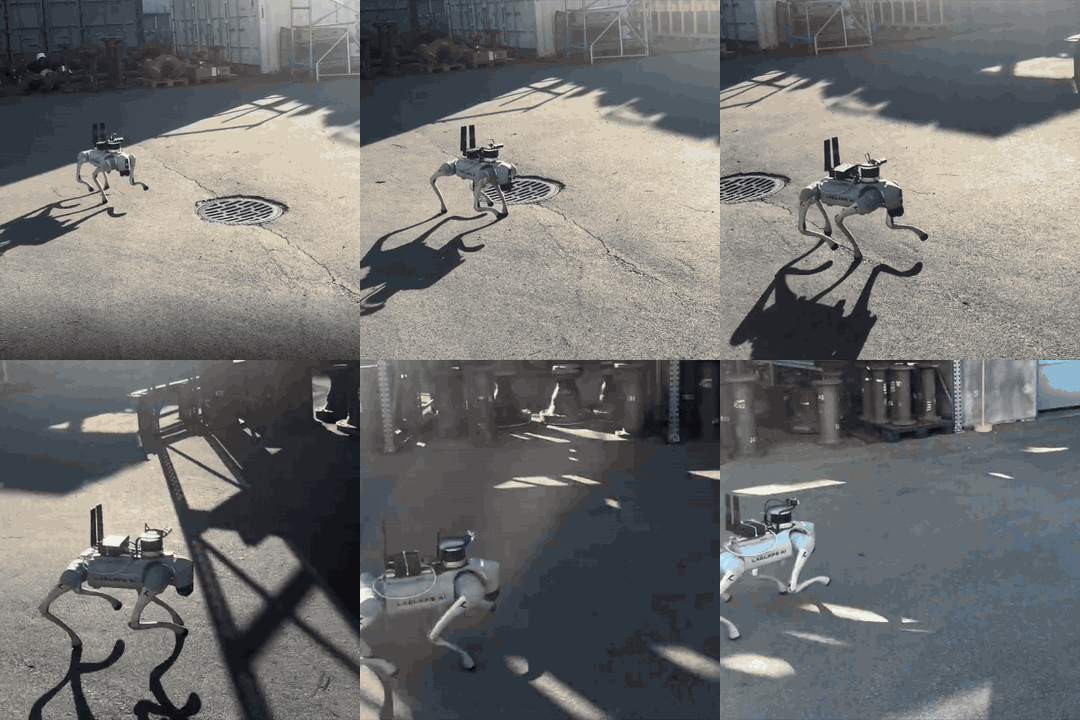
Critical sites are bounded environments, and that is not a consolation prize on the way to a robot that does our laundry. A site can be mapped, the task repeats, and someone is there to escalate to. No simulator contains the glare or the badly parked van, so we test in the real world early and improve in place before we take a system to the customer. That holds from military bases, power grids and data centres to factories and hospitals. Bounded deployment is how the experience that general capability requires actually gets made.
That is what we are building towards: a field intelligence model trained on
- hours accumulated on real sites, rather than on video
- multiple sensors, from the first line of code
- information shared between several machines
So judge us on three things, none of which is a demo video.
- Unattended hours: how long a machine works before a person must intervene, published and comparable. The number our industry hides.
- Explained failures rather than “zero” failures.
- Robot and AI solutions that actually solve an urgent problem, and solve it reliably.



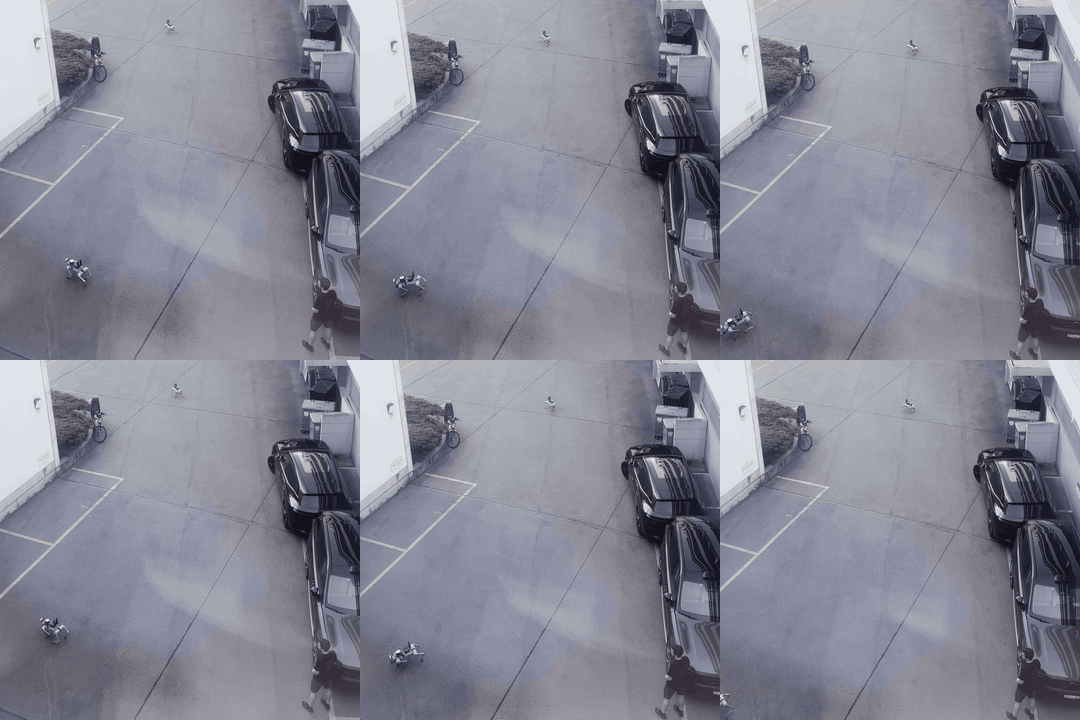

Success is not a robot that astonishes anyone. It is a robot as ordinary as the lift in your building, or the hoover that cleans your floor. We will know this works when the robots are running and nobody thinks to film them.
See anything. Miss nothing. Catch everything.
References
- Counterpoint Research, “Global Humanoid Robot Shipments Soar Nearly 300% YoY in H1 2026”, August 2026 (counterpointresearch.com); Bloomberg, 10 August 2026.
- Associated Press, via ABC News, “Chinese humanoid robots smash human records in 100m sprint”, 23 August 2026 (abcnews.com).
- Open X-Embodiment / RT-X collaboration, Google DeepMind and 33 partner institutions (robotics-transformer-x.github.io).
- AgiBot World Colosseo (Beta), AgiBot / OpenDriveLab (opendrivelab.com/AgiBot-World).
- Yann LeCun, Chief AI Scientist, Meta, quoted by BBC News (bbc.co.uk/news).
- McKinsey & Company, “Turning humanoid supply-chain constraints into billion-dollar wins”, 2026 (mckinsey.com); Carnegie Endowment, “Europe Is Falling Behind in General-Purpose Robotics”, March 2026 (carnegieendowment.org).
- US Federal Communications Commission, 29 July 2026, halting authorisation of new Chinese-made humanoid and quadruped robots on national security grounds. Reported by Al Jazeera (aljazeera.com).
- Laelaps internal trials, 2026. Multi-agent patrol evaluation on a fixed site: mean coverage idleness 0.189 with one agent against 0.134 with two coordinated agents, roughly 29% better. Methodology on request.
Dr Mania Stamatopoulou · Co-founder and Chief Research Officer, Laelaps · maria@laelaps.ai · methodology and deployment data on request